
Driving Returns through
Tech, Data & AI
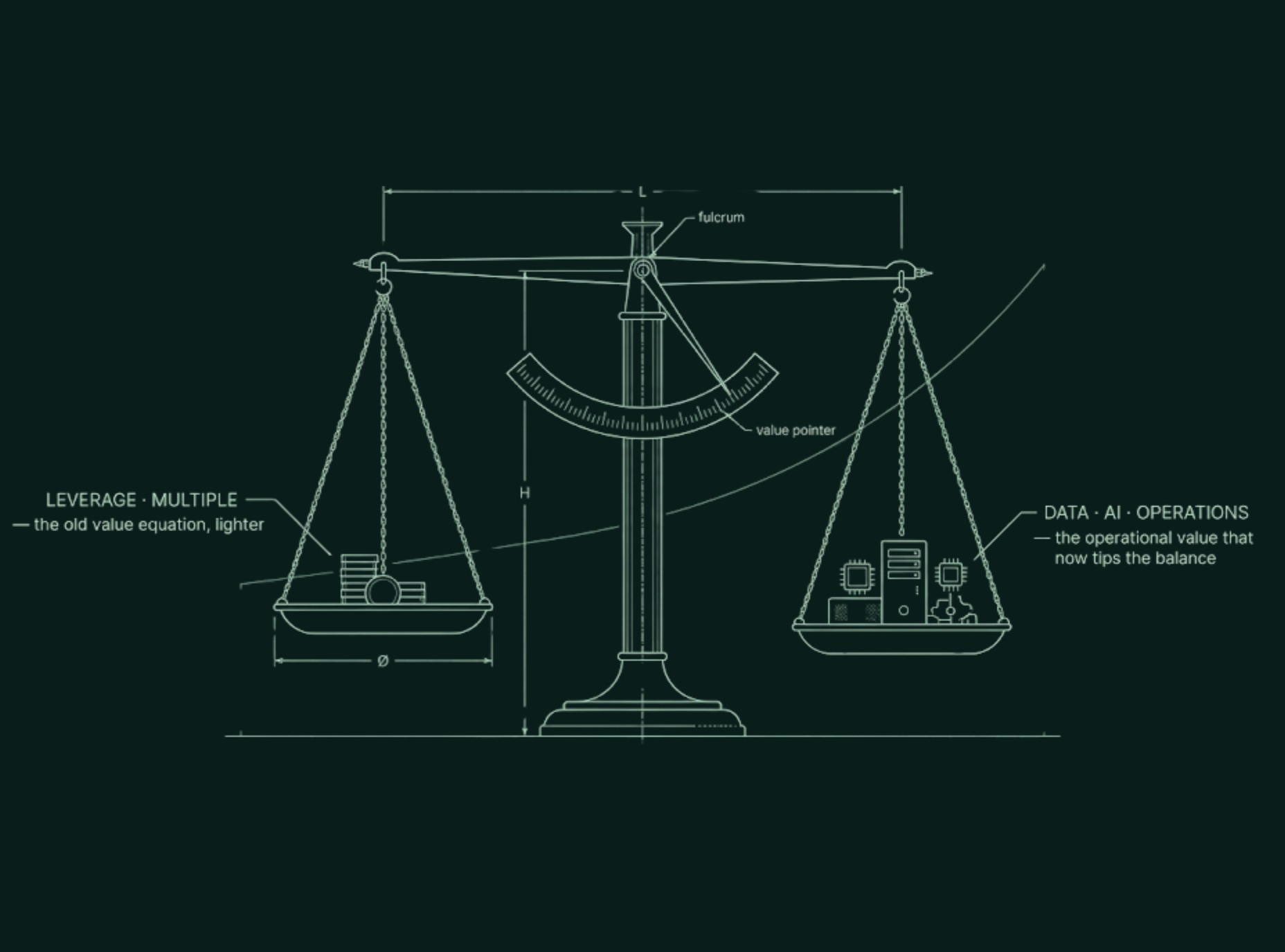
The New Value Equation: leverage and multiple expansion no longer carry a deal. Returns come from operational value creation across the hold, and that runs on systems, data, and AI.
PRIVATE EQUITY PARTNERS











Value Creation Timeline
Tech DD
Audit the target's tech, data and security before you sign. Risk priced, upside quantified.
Seven-dimension tech DD. The red flags that move the price. The upside the seller never built.
First 100 Days
Turn the investment thesis into a tech and data value creation plan. Baseline set, quick wins shipped.
100-day plan. Reporting baseline live by day 30. First AI use cases scoped.
Value Creation
Execute the roadmap. Centralized data, AI leverage, operational visibility across the company.
Data hub and BI layer. AI in the P&L, not the deck. Quarterly value tracking.
Exit-Ready
Make tech a valuation premium, not a diligence risk. The next buyer finds a platform.
Mock tech DD. Key-person dependencies removed. Data governance as a selling point.

Our Private Equity Expertise
How We Work with Your Portfolio
We screen the portfolio with you to find the companies where IT, data or AI is holding back value, or hiding it.
We sit down with the portfolio company's CEO to qualify the situation and scope what's actually at stake.
A focused assessment: where the gap is, what it costs, and what closing it is worth. Tied to a number and a timeline.
We deliver the plan and stay to drive it. Advice you can't execute is just a slide.
Customer Stories
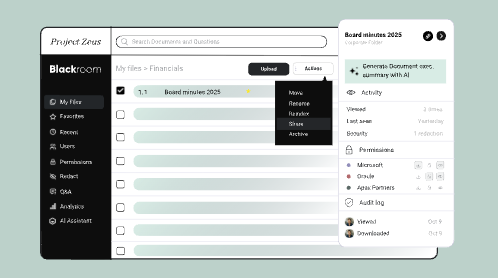
Blackroom: An AI-native M&A data room, with Claude in the product.
Stratos built Blackroom to challenge two-decade incumbents in the virtual data room market, with Claude powering the intelligence dealmakers use inside the room.

Castalie: How Stratos Guided Castalie’s IT Roadmap for Scalability
Stratos partnered with Castalie to audit and overhaul an aging IT infrastructure. By moving away from a limiting monolith to a "Best of Breed" stack, Stratos designed a roadmap to secure revenue, optimize field operations, and support Castalie’s rapid growth.

Chronos Dental - Digitalizing the Dental Lab Network
Chronos Dental modernized its network of laboratories by deploying a custom tool to replace manual workflows with real-time traceability and a seamless digital link between dentists and prosthetists.
Insights
.webp)
.webp)
Ready to solve
tech challenges?
