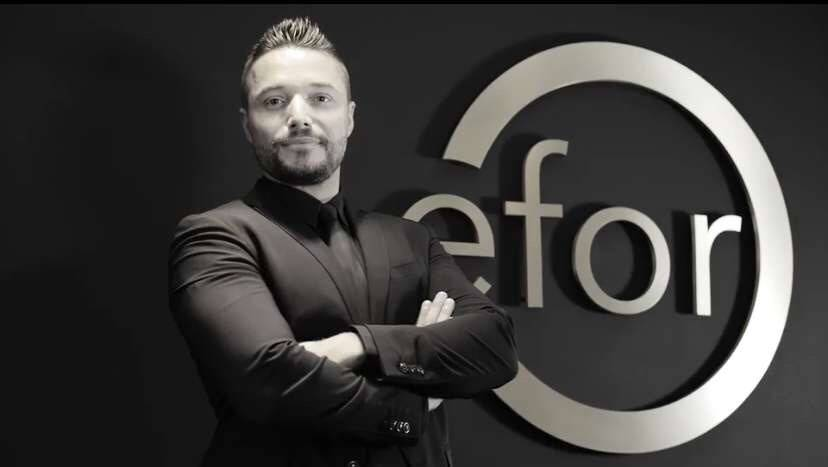
Senior AdvisorYour main point of contact. They frame the need, weigh priorities with you, and hold the link with your teams until the tool is adopted.

Data · Custom Development · Systems Integration
When no software on the market truly fits your business, your teams make do as best they can: duplicate spreadsheets, re-keyed data, tracking sheets no one else can read. We take the time to understand how you actually work, then we build the tool that matches it exactly. It connects to your existing systems, your teams pick it up from day one, and it belongs to you.















Demo
Leave your details. We'll come back to you with a mockup built on one of your real processes: a task your teams handle by hand today, and what it would look like inside a tool designed for it.
Your data stays confidential.
admin time on the processes we equip, at constant headcount
ownership: you hold the code and the tool, with no licence and no per-user cost
from framing to a first version in production on a targeted scope
The reality
When software doesn't fit the business, teams don't complain. They work around it. A spreadsheet here, a manual re-entry there, a tracking sheet only one person can truly read. The work gets done, but your data scatters and no one has a reliable overall view.
Your activity has its rules, its exceptions, its edge cases. Packaged software imposes its own. The result: you pay for features you never use, and there's always one missing that you actually need.
Your decisions get made in files that a handful of people master. The day one of them is away or leaves, part of your operation becomes unreadable to everyone else.
The smallest adaptation goes back through the vendor, billed at a premium, on timelines that never keep pace with your business. You end up giving up on improvements that were simple in the first place.
A vendor who codes without understanding the business ships an application that looks correct on paper, and that teams work around from day one. The budget is gone, the problem is still there.
The options
You pay for features you never open, and the one your business truly needs is always missing.
Interchangeable developers, a project manager between you
and them, and a team that stays far from what you're
building.
The mockup comes out quickly, until the first real business case. There, the tool hits a ceiling, and you're tied hand and foot to a platform and its subscription.
The code stays with the provider. Every change goes back through them, on their price and their schedule.
We map the business before writing a single line of code. The tool fits the way you work.
No juniors subcontracted out, no middleman. The people who design the tool are the ones who opened up your processes with your teams.
Systems integration, automated tests, an architecture built to evolve. What we ship works on deployment day and in the months after.
The code is yours. No licence to renew, no vendor lock-in, no per-user cost.
The project team
Your project is led by a senior trio that turns your field rules into a tool your teams actually use. They're the same people from the first workshop through to training your teams. You'll never be handed off to an anonymous team you've never met.
The Stratos team
Around the three people dedicated to your project, Stratos brings in its data, product, design and development experts. You get a full studio, without juggling multiple providers or points of contact.

The difference, concretely
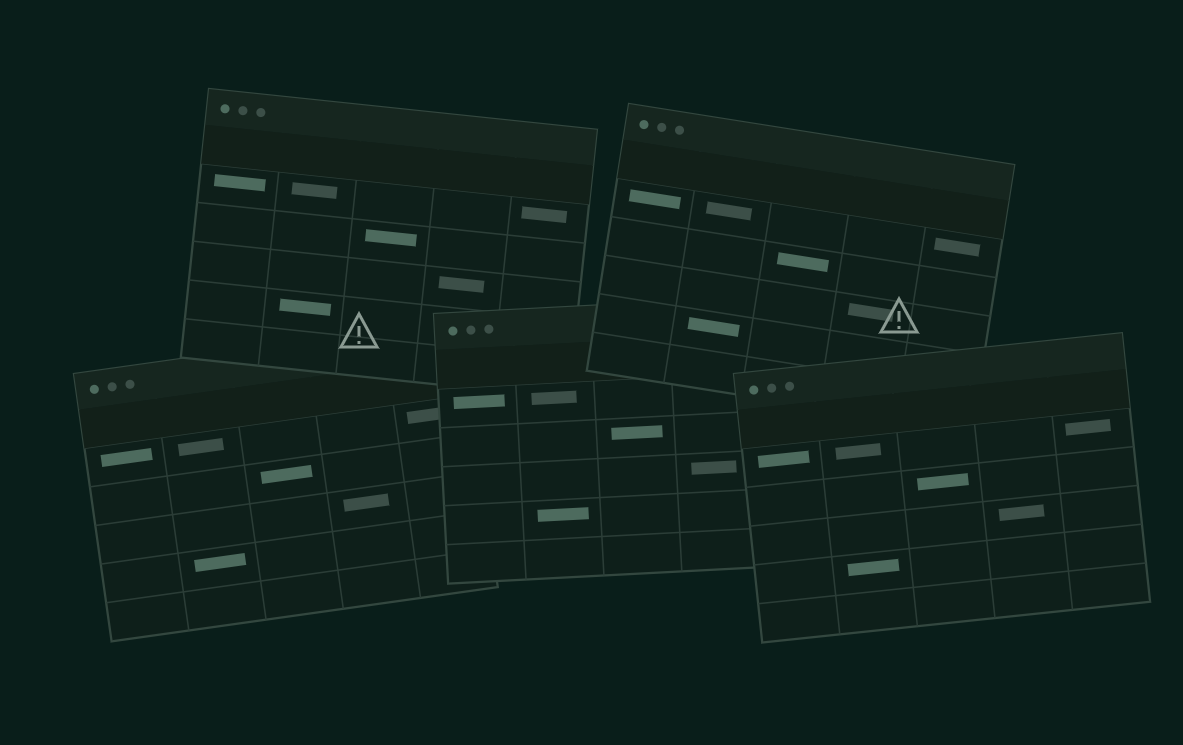

The same data, the same business. On one side, spreadsheets everyone keeps in their own corner. On the other, a single tool where the information is up to date, shared and reliable.
The method
Technique is rarely what makes business software fail. It stalls when it's designed far from the field. Our method keeps your teams in the loop, from the first workshop to production.
Workshops with your field teams, your operations managers, your end users. We capture the real flows, the friction points, the business rules and the exceptions no one ever documented. This is where adoption is won.
Mockups and prototypes tested with end users. Every screen is designed to cut clicks and match the way the work is actually done. We fix things on the mockup, not on code that's already written.
Short sprints, regular demos, full visibility on progress. Your users test continuously. You watch the tool take shape, you make the calls as you go.
We connect the tool to your existing systems, then we train your teams on their real cases, until the tool becomes second nature. Clear documentation, hands-on sessions, support through the first weeks of use. Shipping the tool isn't enough: our job is done only when it's actually used.
Under the hood
Your tool connects to your existing systems (ERP, CRM, business databases) via API. No double entry, no data silo.
We model the tool around your concepts (your objects, your rules, your vocabulary), not around technical constraints. The code stays readable and able to evolve as your business changes.
Every business function is covered by tests. The tool does what it's supposed to, and it keeps doing it when you add a piece.
Automated cloud infrastructure, frequent updates, monitoring in production. The tool stays available and fast, with no work on your side.
When a task calls for it (classification, extraction, decision support), we build AI in at the exact spot where it saves time. Never as a talking point, always because the case justifies it.
What we build
Production tracking, field-service management, planning, consolidated reporting. The tool that replaces the constellation of spreadsheets.
When packaged software imposes its rules and the vendor's custom work costs too much, we build the foundation that fits your organisation.
Mobile data entry, site tracking, managing teams on the move. Built for the field and for mobile work, with or without a connection.
Sales management aligned with your cycle, not a generic vendor's.
The data from your systems, consolidated and readable, so you decide on up-to-date numbers.
Your process has its own rules.
Let's talkFAQ
Adoption is decided before the code. We spend time in the field with your end users, we capture the way they really work, and we have them validate the screens as mockups before any development. A tool designed with the people who will use it doesn't need to be forced on anyone.
Cost depends on scope. We rarely start with everything: we target a first high-stakes process, we ship a version to production, and we expand from there. You see the value before committing to the rest. The 30-minute call is enough to frame a ballpark.
Yes. Integration with your systems via API is part of the foundation. The goal is to remove double entry, not to add one more silo.
On a targeted scope, a first version in production within a few months. We deliver in functional blocks, every two weeks, rather than waiting for a big bang a year out.
Yes. The code and the tool belong to you. No licence, no vendor subscription, no per-user cost. Your teams can run it and evolve it without us.
An IT services firm places profiles with you, with a middleman between you and the people who code. At Stratos, the senior team that maps your business is the one that builds the tool. No handoff, no subcontracted juniors. You talk directly to the people building it.
A 30-minute call is enough to frame the first process to equip and a ballpark.



.webp)